Craig Ellison
If you’ve ever felt a sharp, nagging pain shoot down your leg or experienced persistent stiffness in your lower back that just won’t quit, there’s a chance a disc bulge might be part of the story. It’s one of the most common concerns we see here at The Chiropractor at Castlebury in Eagle, ID — and one of the most misunderstood. Many people hear the phrase “disc bulge” and immediately fear the worst. But the good news is that understanding what’s actually happening in your spine can go a long way toward reducing fear and pointing you toward effective, drug-free care.
What Is a Disc Bulge?
A disc bulge occurs when one of the soft, cushion-like discs between your vertebrae extends outward beyond its normal boundary. Think of it like a burger patty pressing out past the edges of the bun. The disc hasn’t ruptured — but its outer layer is under enough pressure that it shifts out of position, sometimes irritating nearby nerves or spinal structures.
What Is a Disc Bulge and How Is It Different from a Herniation?
Your spine is made up of 33 vertebrae stacked on top of one another, separated by intervertebral discs. These discs have a tough outer layer called the annulus fibrosus and a soft, gel-like center called the nucleus pulposus. Their job is to absorb shock, allow movement, and keep your vertebrae from grinding against each other.
When a disc bulges, the outer layer weakens or compresses unevenly, causing the disc to protrude outward — usually toward the spinal canal or nerve roots. This is different from a herniation, where the outer layer actually cracks or tears and the inner gel-like material escapes through the opening. A bulge is generally more gradual in onset, while a herniation can happen more suddenly and is often more acutely painful.
That said, both conditions exist on a spectrum and can produce similar symptoms. A disc bulge may or may not cause pain on its own — it depends largely on whether it’s pressing on a nerve or other sensitive structure. Dr. Craig Ellison and Dr. Kristin Moore at The Chiropractor at Castlebury have worked with many Eagle, ID patients who discovered a disc bulge on imaging and were surprised to learn it was manageable without surgery or medication.
Common Causes of Disc Bulges
Disc bulges rarely happen overnight, though they can certainly feel that way. More often, they’re the result of cumulative stress on the spine over weeks, months, or even years. Here in Eagle, ID, we see a wide variety of patients — from desk workers who sit for long hours to athletes and tradespeople who put significant physical demand on their bodies. All of them are susceptible to disc issues for different reasons.
Poor posture is one of the biggest contributing factors. When we slouch or round our shoulders forward for extended periods, the pressure inside our spinal discs shifts forward. Over time, this uneven loading can cause the disc to bulge backward toward the spinal nerves. Add in repetitive bending, twisting, or lifting with poor mechanics, and the risk climbs even higher.
Age-related degeneration also plays a role. As we get older, our spinal discs naturally lose some of their water content and elasticity, making them less resilient and more prone to bulging. This doesn’t mean pain is inevitable with age — but it does mean that maintaining good spinal health habits becomes increasingly important as the years go on.
Other contributing factors include obesity, a sedentary lifestyle, prolonged sitting without adequate movement, and previous spinal injuries that were never fully rehabilitated. Genetics can also influence the structural integrity of disc tissue, though lifestyle factors remain highly modifiable and within your control.
Signs and Symptoms to Watch For
The symptoms of a disc bulge vary quite a bit depending on where the affected disc is located and whether it’s pressing on a nerve. In many cases, people with disc bulges have no symptoms at all — the bulge is only discovered incidentally on imaging done for another reason. But when symptoms do show up, they tend to follow recognizable patterns.
A bulging disc in the lower back, which is the most common location, often causes localized pain in the lumbar region along with potential radiation down one or both legs. This radiating pain — sometimes described as burning, tingling, or sharp — follows the path of the sciatic nerve and is often referred to as sciatica. Patients may also notice numbness or weakness in the legs, particularly when sitting for extended periods.
A disc bulge in the neck (cervical spine) can cause pain in the neck and shoulders, with tingling or weakness that radiates down into the arms and hands. Headaches at the base of the skull are also common with cervical disc issues. Patients sometimes mistake these symptoms for carpal tunnel syndrome or shoulder problems before the cervical spine connection is identified.
Mid-back disc bulges are less common but can cause chest tightness or rib-related discomfort that’s easy to confuse with other conditions. If you’re experiencing any of these symptoms and haven’t had a professional evaluation, it’s worth getting checked out. Dr. Craig Ellison and Dr. Kristin Moore take the time to thoroughly assess where symptoms are coming from before developing a care plan.
How Chiropractic Care Fits In
Chiropractic care is widely recognized as a conservative, non-invasive first-line approach for many spinal conditions, including disc bulges. Organizations like the American College of Physicians (ACP) and the National Institutes of Health (NIH) acknowledge spinal manipulation and conservative care as appropriate options for managing low back pain, which is frequently associated with disc issues.
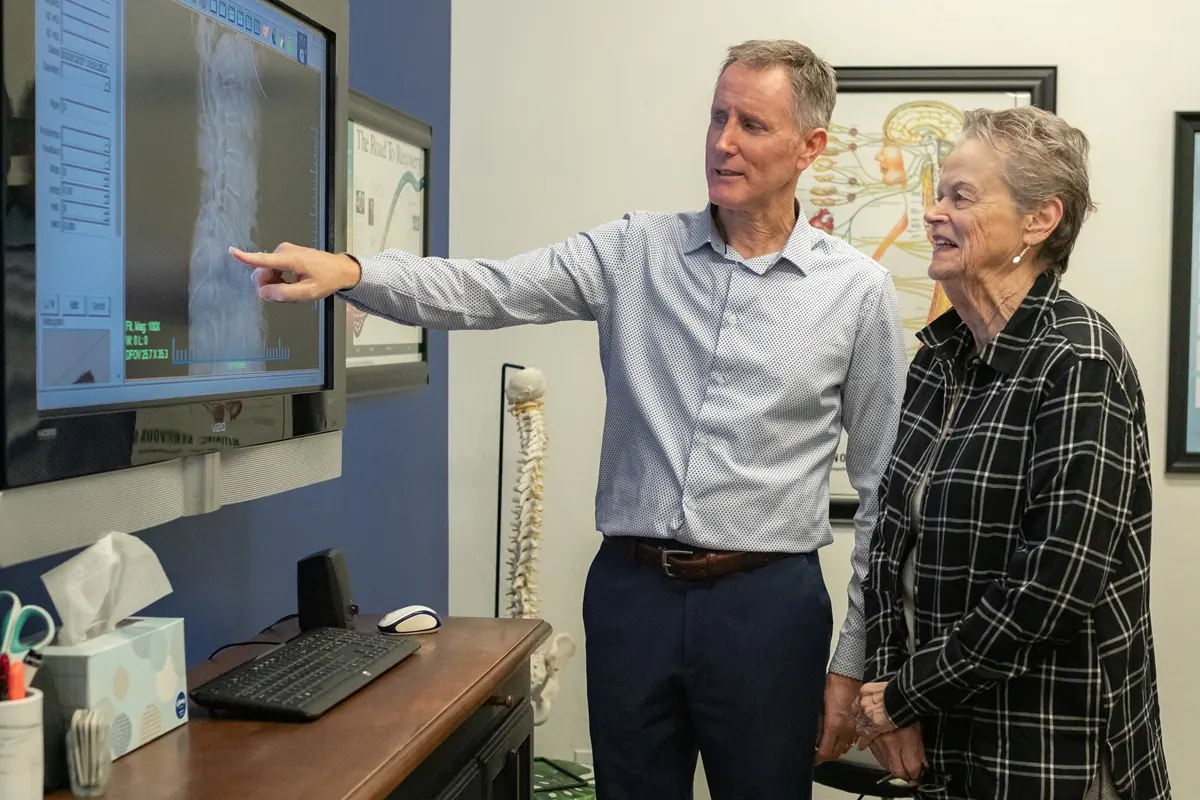
At The Chiropractor at Castlebury in Eagle, ID, the approach begins with a thorough evaluation. Dr. Craig Ellison and Dr. Kristin Moore assess your spinal alignment, range of motion, neurological function, and postural patterns. This helps them understand not just where the disc is bulging, but why — and what specific approach will be most helpful for your situation.
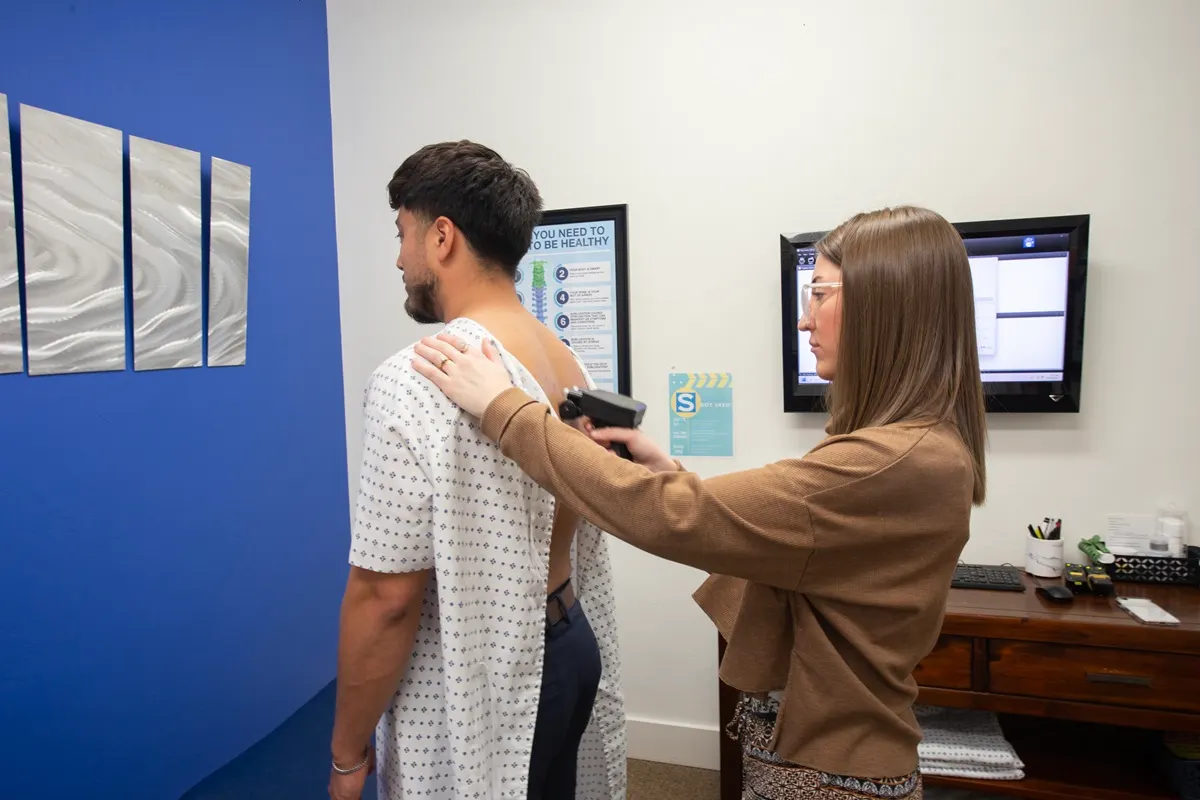
Chiropractic adjustments aim to restore proper movement and alignment to the vertebrae surrounding the affected disc. When the joints above and below a bulging disc are moving freely and in proper alignment, the pressure on that disc can be reduced significantly. This doesn’t mean the disc immediately “goes back into place” like a switch being flipped — healing takes time — but restoring biomechanical function creates a better environment for natural recovery.
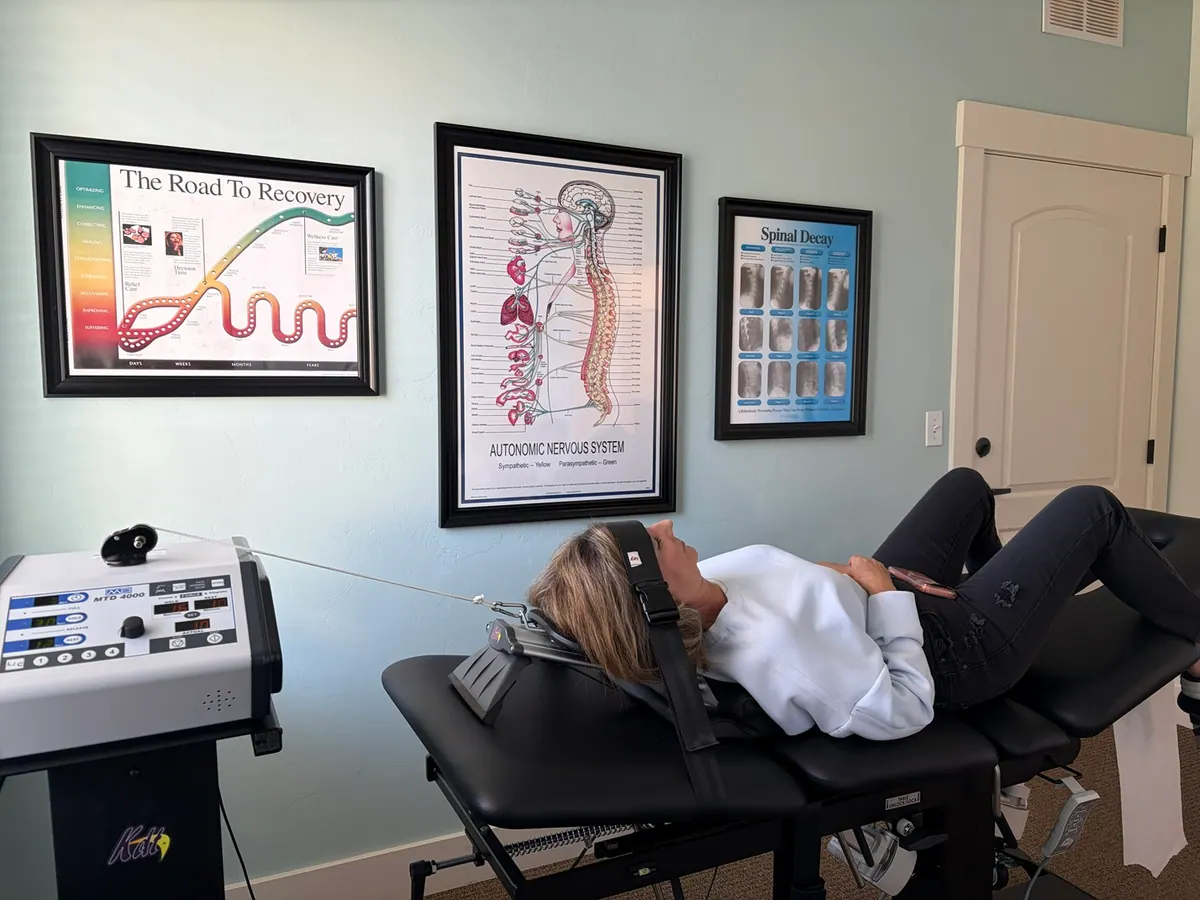
Beyond adjustments, our team at The Chiropractor at Castlebury may incorporate soft tissue work, non-surgical spinal decompression, Laser Therapy, postural retraining, and rehabilitative exercises to support recovery. The goal is always to reduce pain, restore function, and educate you on how to protect your spine going forward — not just provide temporary relief.
Practical Tips for Managing a Disc Bulge at Home
While professional care is important, there’s a lot you can do between appointments to support your recovery and reduce symptom flare-ups. These tips are general guidelines — always follow the specific recommendations from your chiropractor, since every case is different.
First, be thoughtful about how you move. Avoid prolonged sitting without breaks. If you work at a desk, aim to stand up and move around at least once every 30 to 45 minutes. When you do sit, try to maintain a neutral spine — lumbar support cushions can be helpful here. Avoid deep forward bending or heavy lifting during acute flare-ups, and when you do lift, keep the object close to your body and use your legs rather than your back.
Gentle movement is almost always more beneficial than complete rest. Activities like walking, swimming, or light stretching keep blood flowing to the disc and surrounding tissues, which supports healing. Prolonged bed rest can actually slow recovery and contribute to muscle deconditioning. Movement is medicine — done gently and consistently.
Apply ice during acute flare-ups to help reduce inflammation (typically 15-20 minutes at a time), and consider heat for chronic stiffness and muscle tension. Sleep position matters too — lying on your side with a pillow between your knees can take pressure off the lumbar discs and help you wake up with less pain.
When to See a Chiropractor
If your back or neck pain has lasted more than a few days without improvement, or if you’re noticing any radiating pain, tingling, or numbness into your arms or legs, that’s a good sign it’s time to get evaluated. A disc bulge that’s irritating a nerve won’t always resolve on its own, and the longer nerve irritation persists, the more important it becomes to address it properly.
Residents of Eagle, ID who are dealing with recurring low back pain, sciatica symptoms, or neck and shoulder discomfort are encouraged to reach out to The Chiropractor at Castlebury. Both Dr. Craig Ellison and Dr. Kristin Moore take a careful, individualized approach — and early care often means a faster, smoother recovery.
However, there are certain red flag symptoms that warrant immediate medical attention rather than chiropractic care: loss of bowel or bladder control, sudden severe weakness in both legs, saddle anesthesia (numbness in the groin area), or pain following a significant trauma. These symptoms require urgent evaluation by a medical physician or emergency care provider.
Disc Bulge vs. Disc Herniation: Key Differences
Feature | Disc Bulge | Disc Herniation |
|---|---|---|
Outer Layer (Annulus) | Intact but weakened or displaced | Cracked or torn |
Inner Material | Stays contained within outer layer | May escape through the tear |
Onset | Usually gradual | Can be sudden or gradual |
Pain Level | Ranges from none to moderate | Often more acute and intense |
Nerve Involvement | Possible but less common | More likely due to disc material proximity |
Common Causes | Postural strain, degeneration, overuse | Trauma, heavy lifting, acute injury |
Conservative Care Response | Often responds well to chiropractic care | May respond to conservative care; some require further intervention |
Myths vs. Facts About Disc Bulges
Myth: A disc bulge means you need surgery.
Fact: The vast majority of disc bulges are managed successfully through conservative care, including chiropractic treatment, physical rehabilitation, and lifestyle modifications. Surgery is generally considered only when conservative approaches have been exhausted and there is significant, progressive neurological compromise.
Myth: If the pain goes away, the disc bulge is healed.
Fact: Pain relief and structural healing are not the same thing. A disc may still be bulging even when symptoms subside. Continuing with rehabilitative care and postural correction helps address the underlying mechanics — reducing the likelihood of future flare-ups.
Myth: You should rest completely until the pain is gone.
Fact: While rest during an acute flare is reasonable, prolonged inactivity can actually slow recovery and weaken the muscles that support your spine. Gentle, appropriate movement is one of the best things you can do for a disc bulge. Your chiropractor can guide you on what level of activity is safe.
Myth: Disc bulges only happen to older people.
Fact: While disc degeneration does increase with age, disc bulges can and do occur in younger adults and even teenagers — particularly those who are sedentary, overweight, or involved in high-impact activities without proper body mechanics or recovery habits.
Myth: A disc bulge seen on an MRI always explains your pain.
Fact: Research has shown that many people have disc bulges on imaging with no pain whatsoever. This is why a thorough clinical evaluation — not just imaging — is essential for understanding whether a disc finding is truly the source of your symptoms.
Final Thoughts from The Chiropractor at Castlebury
A disc bulge is a real and sometimes very uncomfortable condition — but it is not a life sentence. With the right information, the right care team, and a commitment to protecting your spinal health, most people recover well and return to the activities they love. That’s the message we want every patient in Eagle, ID to walk away with.
At The Chiropractor at Castlebury, Dr. Craig Ellison and Dr. Kristin Moore genuinely care about helping the Eagle community understand their bodies and find lasting relief — not just a temporary fix. Whether you’re newly experiencing back pain, dealing with something that’s been lingering for months, or just want to be proactive about your spinal health, we’re here to help you take the next step with confidence.
If you’re in Eagle, ID or the surrounding area and you’re wondering whether a disc bulge might be behind what you’re feeling, don’t wait. Early evaluation and care can make a meaningful difference in your recovery timeline and long-term quality of life.
Frequently Asked Questions
Can a disc bulge heal on its own?
In some cases, disc bulges can improve over time with conservative care, lifestyle changes, and appropriate movement. However, they don’t always resolve completely without intervention, especially if the underlying postural or biomechanical factors aren’t addressed. Professional evaluation is the best way to understand your specific situation.
How long does it take to recover from a disc bulge?
Recovery timelines vary widely depending on the severity of the bulge, the presence of nerve involvement, and how consistently you engage with care. Many patients begin to notice improvement within several weeks of starting chiropractic care, though full recovery may take longer. Dr. Craig Ellison and Dr. Kristin Moore can give you a more personalized timeline after a thorough evaluation.
Is chiropractic care safe for a disc bulge?
Yes, chiropractic care is generally considered a safe and appropriate conservative option for disc bulges when performed by a qualified chiropractor following a proper assessment. Your chiropractor will modify techniques based on your specific condition to ensure care is both effective and comfortable.
What is the difference between a disc bulge and sciatica?
Sciatica refers to pain that travels along the sciatic nerve — typically from the low back down through the buttock and leg. A disc bulge in the lumbar spine is one of the most common causes of sciatica, though not the only one. Addressing the disc bulge often helps resolve sciatic symptoms over time.
Should I get an MRI if I think I have a disc bulge?
Not always immediately. Most clinical guidelines recommend starting with a thorough physical examination before ordering imaging, particularly if symptoms are mild to moderate and have been present for a short time. Your chiropractor can help determine whether imaging is necessary based on your symptoms and exam findings.
Can exercise make a disc bulge worse?
Certain exercises — particularly those involving heavy loading, deep forward bending, or high-impact movement — can aggravate a bulging disc. However, appropriate, guided exercise is an important part of recovery. A chiropractor or rehabilitation specialist can help you identify which movements are safe and beneficial for your specific condition.
TL;DR Summary
A disc bulge occurs when a spinal disc’s outer layer extends beyond its normal boundary, potentially irritating nearby nerves — but it does not always cause pain.
Common causes include poor posture, repetitive strain, age-related degeneration, and prolonged sitting without movement breaks.
Symptoms can range from localized back or neck pain to radiating pain, numbness, or tingling in the arms or legs (sciatica is a common example).
Chiropractic care — including spinal adjustments, soft tissue work, and postural retraining — is a well-recognized, conservative approach for managing disc bulges.
Dr. Craig Ellison and Dr. Kristin Moore at The Chiropractor at Castlebury in Eagle, ID are here to provide thorough, individualized care to help you recover and protect your spinal health long-term.